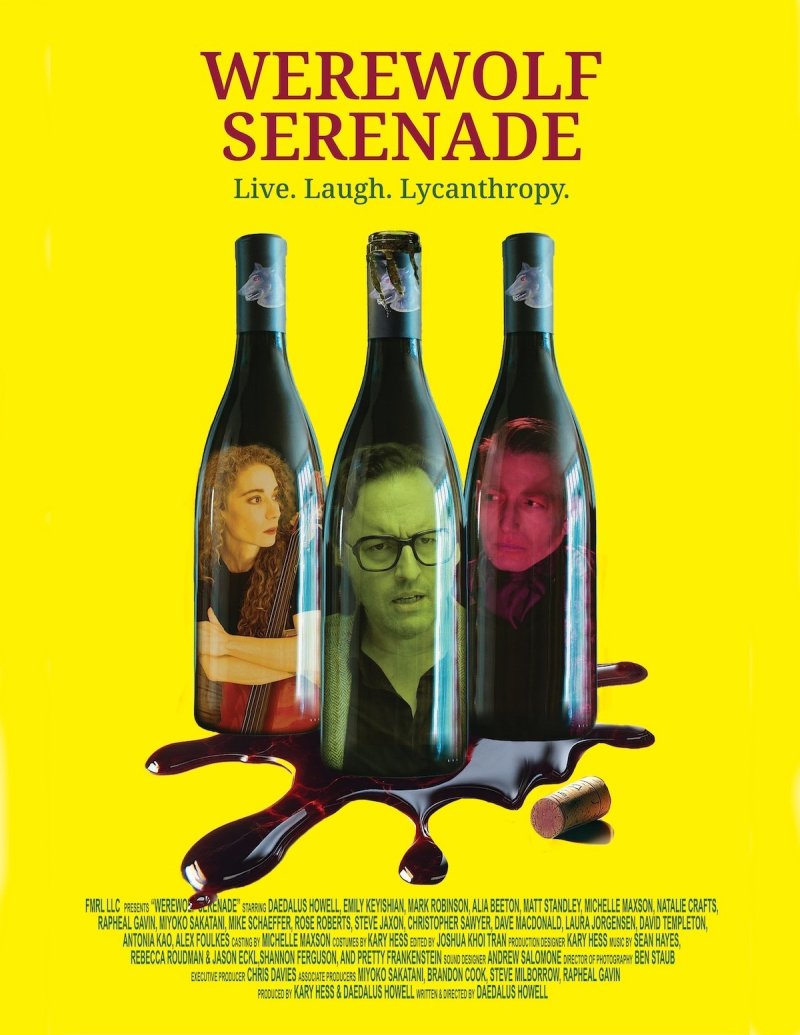
If you're looking for a fangtastic date night, the new film Werewolf Serenade, a campy comedy made entirely here in Sonoma wine country has you covered.
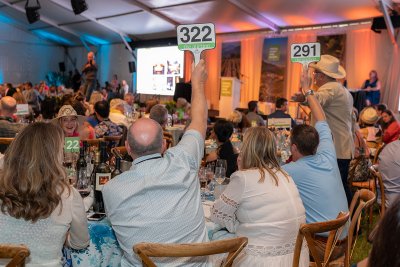
The locally produced feature makes its film festival debut at the tenth annual AVFest, 9 pm, Saturday, May 4, 2024, at Longboard Vineyards, 5 Fitch St., Healdsburg, CA.
Werewolf Serenade joins over 70 films from around the world over 10 days of film and festivities celebrating the art of cinema. Tickets are $15 and available here: bit.ly/wolf-avfest.
The 80-minute film marks the latest collaboration between Petaluma based Writer-Director Daedalus Howell and Producer and Production Designer Kary Hess. Hess and Howell’s previous movie, Pill Head (“Possibly the most bizarre film ever made in Petaluma…” — Petaluma Argus-Courier), is now streaming on Amazon Prime.
Howell is known in some markets at the editor of the North Bay Bohemian and Pacific Sun; Hess is the editor of Made Local Magazine.
Synopsis: When the Chair of the Parapsychology Department at the Freestone School of the Arts turns up dead, burnt-out film professor Peter MacTire is asked to step in and complete his generously endowed research project. With the school’s fate —and his marriage — on the line, MacTire accepts, not knowing the task will bring him face-to-face with an evil occultist and transform his life forever.
Howell stars as Peter in this cleverly written B-movie horror opus full of werewolf lore and double entendre. Shot at recognizable locations throughout the city, this over-the-top action comedy will have you cheering for its bumbling protagonist as he struggles to foil a nefarious plot.
Werewolf Serenade also stars Emily Keyishian, Mark P. Robinson, Alia Beeton, Christopher Sawyer, Rapheal Gavin, Natalie Crafts and a host of other familiar faces from around the county.
Howell and Hess will participate in a Q&A at the May 4 screening.
“‘Werewolf Serenade’ leans into lycanthropy (a mental disorder in which a patient believes that he or she is a wolf, or similar) with a nod to screwball romantic comedies and the expressionistic horror films of the mid-20th century,” says Howell. “It puts a comic spin on the ‘mid-life crises’ — from increasingly complicated relationships to body horror — mostly that of Gen X.
As an extra layer of fun for local audiences, Hess points out that “The film is a love letter to Petaluma and its history of filmmaking—from local places and faces—to touchstones of the genre that are accentuated in a way that can only happen in a town like ours.”
"We shot the film mostly at recognizable locations in Petaluma, which is an extra layer of fun for local audiences,” says Hess.
May is National Historic Preservation Month, and Petaluma is excited to celebrate for the third year. The event is recognized across the country to celebrate each community’s cultural heritage and the importance of preserving local history and historical places. This year, various local organizations are collaborating to provide a month’s worth of events and activities to celebrate Petaluma’s past.
“National Historic Preservation month is the perfect time to think about how we can preserve Petaluma’s vibrant past while also shaping a sustainable, culturally rich future. Along with our partners, we have lined up many exciting programs that build awareness about the people and places that have made Petaluma so special. Our hope is to inspire more conversations about how preservation and adaptive reuse can go hand-in-hand with innovation and progress,” says Stacey Atchley, executive Director of the Petaluma Historical Library & Museum.
The first local National Historic Preservation Month event takes place on Wednesday, May 1st, at 6:30 p.m. at the Petaluma Historical Library & Museum with an in-depth presentation and discussion by urban planner Dan Zack on the adaptive reuse of historic buildings in downtown revitalization efforts.
Other scheduled events include walking tours of historic downtown. In the last two weeks of May, the Petaluma Regional Library History Room librarian, Connie Williams, has teamed up with local historian Katherine Rinehart to organize a Petaluma History Scavenger Hunt.
Join in on May 15th (6:30 pm) at the rehabilitated Carlson-Currier Silk Mill, now operating as Petaluma’s newest “old” hotel—the Hampton Inn—for a lively panel discussion of local tourism organizations on the role of tourism place-keeping and place-making at the state and local levels.
Petaluma has a rich history dating back to the mid-1800s, and the city takes pride in preserving its unique character and charm, its vibrant history museum, a State Historic Park, a Petaluma history room at the local library, and a community supportive of historic preservation.
“In a time when we are all rushing to the newest tech and a time where so much in the world is changing, it is key that we remember where we have been as a means of grounding us. Petaluma celebrates and honors our community's history in the beautiful architecture of our historic residential and commercial buildings. Investments and care in the historic preservation of our legacy structures will be the gift we give to Petalumans of the future,” sas Mayor Kevin McDonnell.
The Petaluma Historical Library & Museum is the Historical Heart of Petaluma. Its mission is to preserve the unique history of Petaluma and provide educational and cultural services to the community. Open Thursday - Sunday 10am - 4 pm. Admission is free, donations appreciated!
The long wait for news on the city's historic riverfront rail trestle renovation project may be inching closer to a start date in the forseeable future. Applications with shovel ready plans for national funding are the hot topic of conversation in Petaluma's historic circles. The Petaluma Woman's Club, founded in 1895 by a group of civic minded and visionary women, has provided the city with grant writing support and a pledge to fundraise for extras for a public riverfront promenade once construction grants have been secured. Click here to find out more about the Woman's Club's ongoing Time to Trestle efforts.
Click here for a video of Katherine Gregor, spokesperson for Petaluma Woman's Club speaking about the Trestle, this Spring.
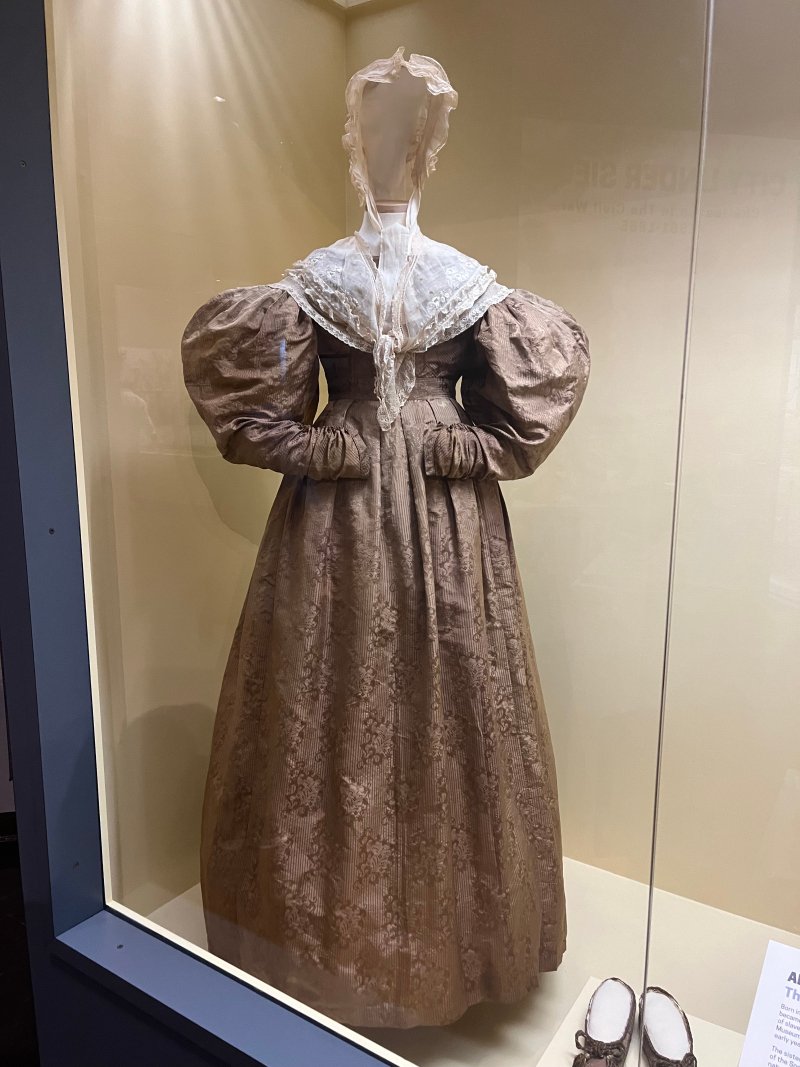
It was during my visit to Charleston in January this year that I first heard of the story of the Grimké sisters, Sarah and Angelina, who were arguably the most famous women in America in the 1830s.
I was viewing Sarah's dress and bonnet and shoes in the Charlseton History Museum section on the abolition of slavery movement, when my host, Elaine, waxed lyrical about the back story. Sarah and her younger sister, who went by Nina, were amongst the earliest American feminist thinkers, and though their remarkable and inspirational story was largely lost in time, they were brought back to life in the 2014 novel The Invention of Wings by Sue Monk Kidd.
"Read it," Elaine urged. I hadn't read it before. So I did. And it was all the more poignant having newly wandered the historic neighborhoods where the sisters were born and raised. Author Sue Monk Kidd is from Charleston. She was drawn to further research after discovering their story in the Brooklyn Museum, one that she couldn't believe she hadn't heard about as she was living in Charleston herself.
Sue Monk Kidd's fictionional account of Sarah's life and that of a fictional enslaved woman in her household named Hetty (nicknamed Handful) spans thirty years of friendship through a body-and-soul-crushing era in American history. Equal voice is given to Hetty's endurance and fight.
The novel stands today as a powerful reminder of how much we can learn from the past. How is it that a city's two, most accomplished historical figures were brushed under the rug of time? How easy is it to squander the fights that have gone before in the battle for freedom?
Folklore in the novel is painstakingly interwoven. It took the author four years to write her take on the sisters' story. The historical fact finding from reading diaries and museum material is substantial and a stark lesson as to why we would consider turning the clock back to the 1800s in this country so far as women's rights, human rights? It sounds unfathomable. Sadly, it's not.
The author grew up in pre-feminist America. I appreciate her telling of this important story.
“I ask no favor for my sex. All I ask of our brethren is that they take their feet off our necks.”
Sarah Grimké
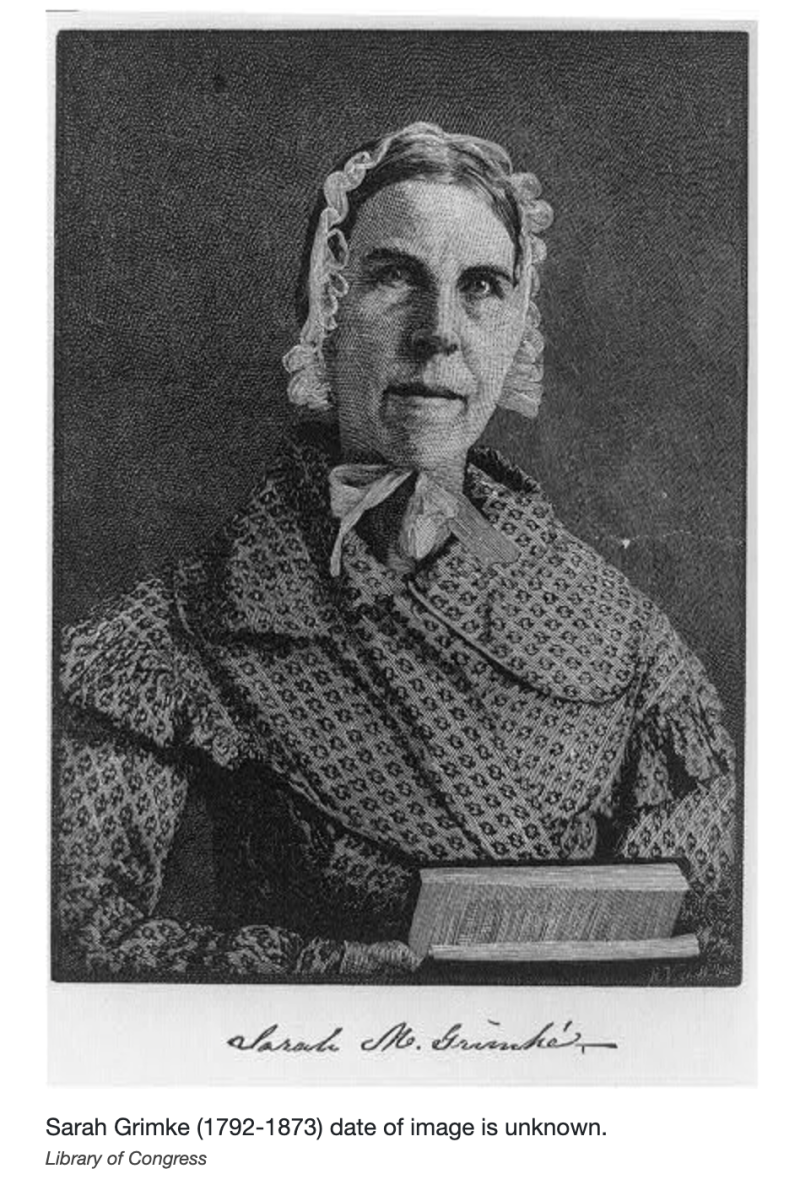
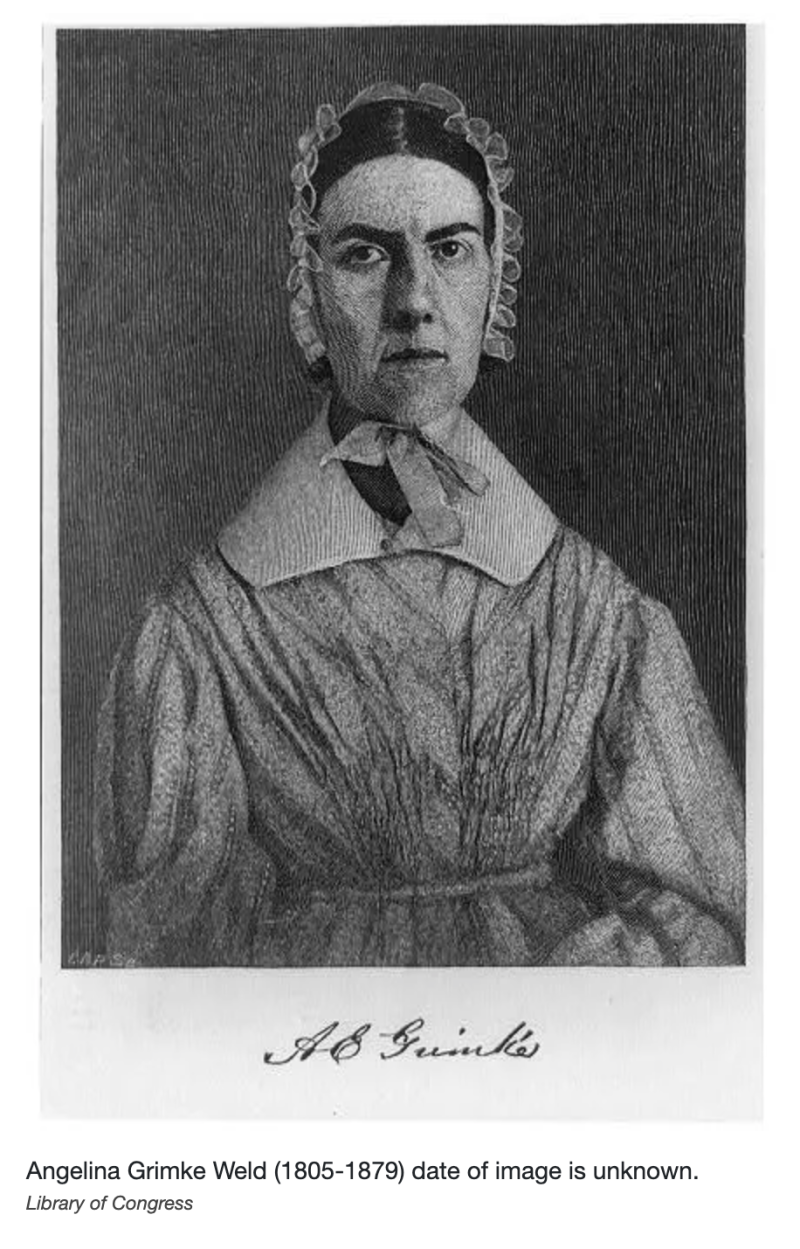
These early and prominent activists for abolition and women’s rights, Sarah Grimke (1792-1873) and Angelina Grimke Weld (1805-1879) were raised in the cradle of slavery on a plantation in South Carolina and a town house in Charleston.
The Grimke sisters, grew to despise slavery after witnessing its cruel effects as children. According to the National Parks Service Women's Rights Section, Sarah later recalled that her father, the wealthy Judge John Fauchereaud Grimke, held his 14 children to the highest standards of discipline and sometimes required them to work in the field shelling corn or picking cotton. She observed, “Perhaps I am indebted partially to this for my life-long detestation of slavery, as it brought me in close contact with these unpaid toilers.”
Sarah became godmother to her baby sister Angelina when she was just 12 years old. Sarah accompanied her father to Philadelphia in 1819 so that he could receive medical treatment. It was there that she encountered members of the Society of Friends, Quakers, who helped her care for her dying father.
She returned to Charleston after he father passed and her feelings of fierce opposition to slavery were quickly renewed: “…after being for many months in Pennsylvania when I went back it seemed as if the sight of [the slaves’] condition was insupportable…can compare my feeling only with a canker incessantly gnawing…. I was as one in bonds looking on their sufferings I could not soothe or lessen….”
Sarah gave up the finery of her upbringing when she converted to Quakerism against her families wishes and moved to Philadelphia in 1821. Following closely in her sister's footsteps in 1829, Angelina had also followed a calling to become a Quaker and moved north to be with her sister.
This made the sisters virtual outcasts in the South, but they were also at odds with many northerners after William Lloyd Garrison published a personal letter Angelina wrote to him in The Liberator.
Angelina encouraged Garrison to stand his ground even in the face of mob violence: “If persecution is the means which God has ordained for the accomplishment of this great end, emancipation, then…I feel as if I could say, let it come; for it is my deep, solemn deliberate conviction, that this is a cause worth dying for….”
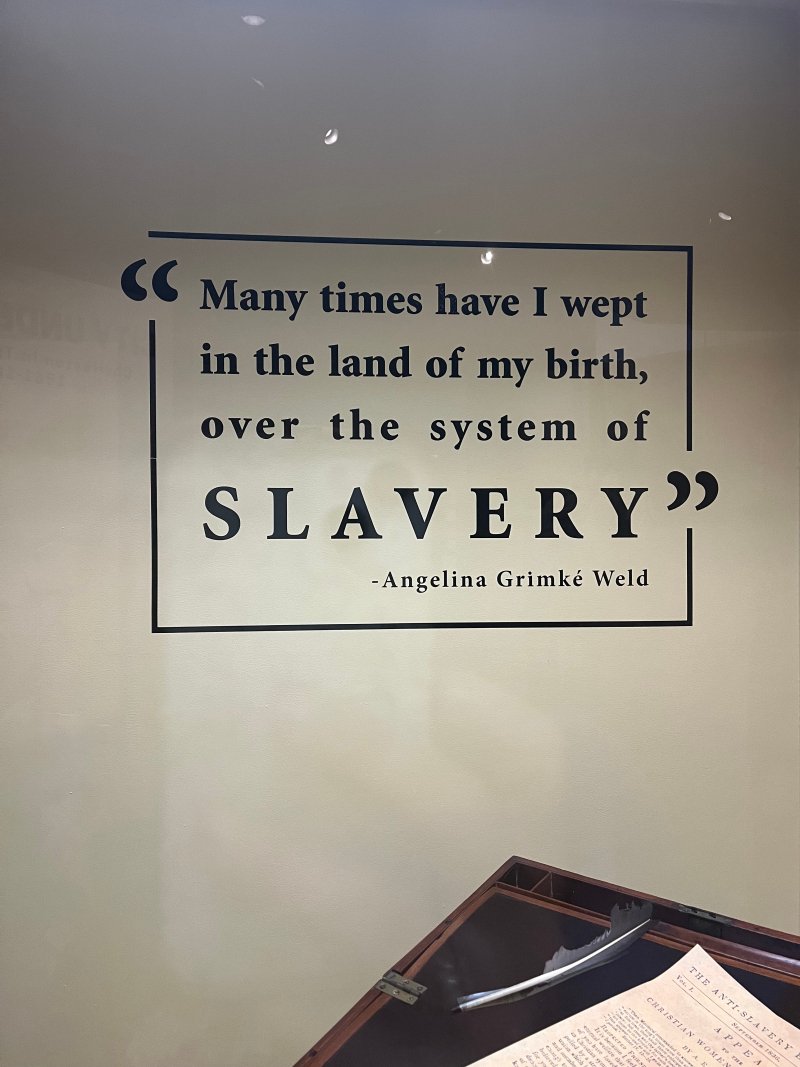
She bravely opted not to recall the letter despite the outrage it caused among fellow Quakers who believed she was a radical abolitionist. Despite the disapproval they faced from fellow Quakers and from a society that did not accept women as public speakers on controversial topics such as slavery, the Grimke sisters found themselves caught up in the forefront of the antislavery movement.
Angelina wrote her Appeal to the Christian Women of the South in 1836, imploring white southern women to embrace the antislavery cause. She wrote, “I know you do not make the laws, but I also know that you are the wives and mothers, the sisters and daughters of those who do; and if you really suppose you can do nothing to overthrow slavery, you are greatly mistaken.”
According to history, her message drew the ire of southerners who opposed its abolitionist message and northerners who felt that women had no business writing or speaking about something as controversial as slavery. The outcry over women abolitionists prompted Sarah then to write Letters on the Equality of the Sexes.
By the late 1830s the Grimke sisters had firmly established themselves not only as abolitionists but also as proponents of women’s rights.
An invitation to ooh and aah and explore the history of San Francisco through fashion is proving a hot ticket at the de Young Museum in San Francisco this spring. Featuring one of the most iconic collections of 20th- and 21st-century women’s clothing in the United States, this glamorous and compelling exhibition includes 100 collection highlights, along with local loans of high fashion and haute couture, including the beautiful evening dress shown above, which was gifted to the museum by the late Nan Tucker McEvoy of San Francisco Chronicle and McEvoy Ranch renown. It was created by British designer and Titanic survivor, Lady Duff Gordon in 1921 and would look perfectly in keeping in today's celebrity award show styling, over 100 years later.
I found myself completely drawn in by the descriptions of who donated these fabulous outfits, who wore them and where and which San Francisco sparkling events called for such an entrance.
We don't see much society coverage in the press in the San Francisco Bay Area these days, certainly less since the pandemic put a sudden stop to gala openings and seasonal spectaculars. Televized award shows and the Met Gala aside, do people dress to this degree now that we're back in business as far as fundraisers and the like? I think everyone in the galleries the morning I was there may have been harboring a secret desire to grab a frock and swan through the museum in ultimate style! At least in our dreams.
This is the first major presentation of the museum's highly covetable costume collection in over 35 years, showcasing designs from French couturiers, Japanese avant-garde designers and other pillars of the fashion industry, including Christian Dior, Alexander McQueen, Christopher John Rogers, Comme des Garçons, and Rodarte.
The designs on view, reflect San Francisco’s long-standing tradition of self-expression through fashion. I can't wait to see what comes next with couture - it's where art meets fashion and though most of us can't afford anything remotely couture, these timeless designs undoubtedly continue to shape and influence today's young designers and in turn, the popular look for the masses.
San Francisco was a blossoming, cosmopolitan city at the turn of the 20th Century. It was home to a plethera of elegant hotels, restaurants and cultural events. Union Square, downtown, became home to several luxury department stores, selling imported gowns from Europe (mainly France) and New York to a fast growing population of stylish women.
The great earthquake and fire of 1906 destroyed this burgeoning downtown fashion district. But within a matter of weeks, enterprising merchants rallied to reestablish temporary stores to cater to an affluent and highly resilient customer base.
Department stores started moving back into downtown in 1908. "The New San Francisco" included the 1915 Panama Pacific International Exposition, a world's fair where Parisian couture fashions took center stage. American replicas and increasing ranges of couture coming out of Italy and other European cities followed suit. The exquisite Delphos ensemble pictured above is from 1920 and was designed by Mariano Fortuny of Spain.
Coco Chanel changed the way women dressed by using new techniques, materials and designs. This moon and stars gown represents a far less fussy design for the increasingly mobile modern woman of the 1920s. Stars, moons, comets and the sun are amongts the permanent symbols of the house of Chanel.
San Francisco of the sixties and seventies may have been known for its hedonistic fashion and culture, but there was plenty of couture out there at the glitziest of galas and receptions. Simple and elegant.
Suits came into vogue around that time and the design houses quickly adapted the menswear look to skirts and pant suits. American designers had a field day in this arena. It took a while for the pant suits to be accepted as suitable evening attire in some more conservative establishments. While this may be surprising to hear, given San Francisco's reputation for breaking the rules, the women who wore them first were having none of it and marched on in, pushing past protocol and in one instance, dropping the pair of offending pants and striding on in her underwear!
Tickets are valid for Fashioning San Francisco: A Century of Style, on view at the de Young January 20–August 11, 2024.
Tickets include entry to Fashioning San Francisco: A Century of Style, as well as all permanent-collection galleries at the de Young on the day of your visit.
Tickets include access to Fashioning San Francisco Augmented Reality Experience. Space is limited.
Welcome! I'm Frances. I'm a British/American freelance journalist and author living the good life in the spectacular coastal region of Sonoma County, Northern California.
I've published four books including two award-winning non-fiction books on the food and farming culture of southern Sonoma County and coastal West Marin: Fog Valley Crush and Fog Valley Winter.
My first novel (also set in Northern California), Big Green Country, was published in 2019 and won Best Western Regional Fiction in the Independent Book Publishers Awards in 2020.
My second novel, released in December 2022, The House on Liberty Street — Home of Second Chances, is a roller-coaster, 24-hour family drama set during the holidays in a fictional Victorian house in historic West Petaluma, Sonoma County. The House on Liberty Street was a finalist in the 2023 National Indie Excellence Awards.
I'm working on releasing my third novel, a contemporary climate fiction story, in the fall of 2025. This next page-turner is set in a house on the rugged Sonoma Coast.
Southern Sonoma Country Life is where I share my musings of life in this region of wine country as well as my travels abroad.