It was during my visit to Charleston in January this year that I first heard of the story of the Grimké sisters, Sarah and Angelina, who were arguably the most famous women in America in the 1830s.
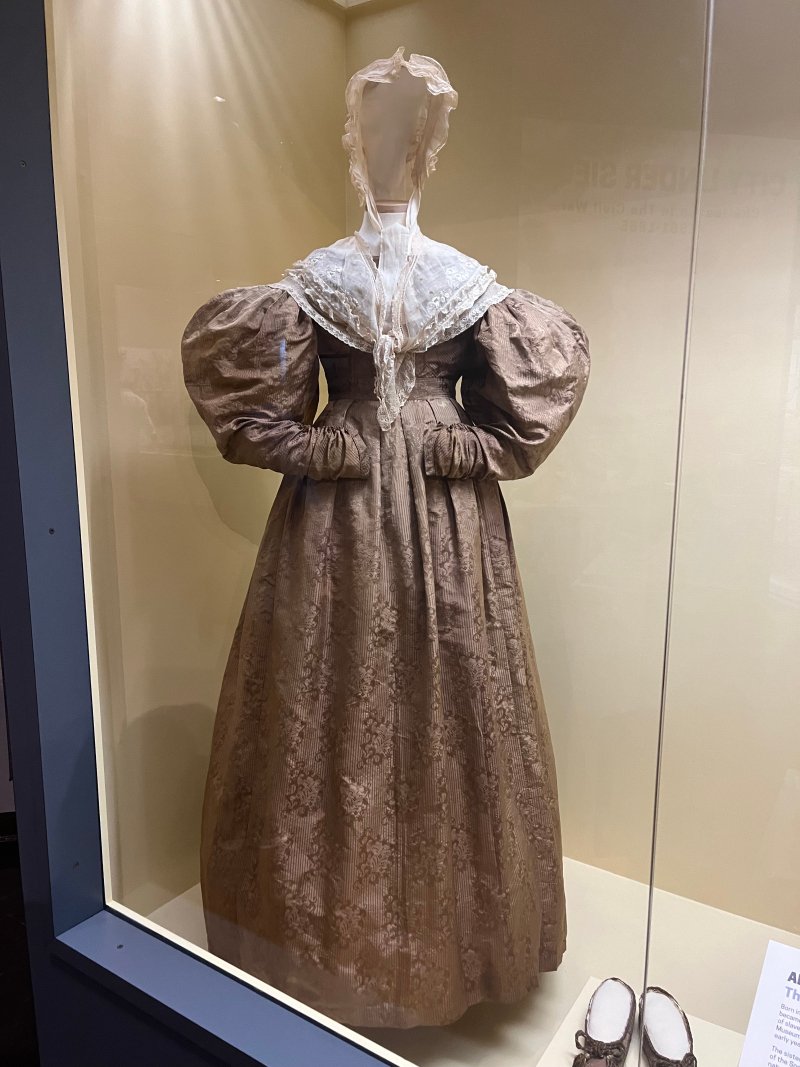
I was viewing Sarah's dress and bonnet and shoes in the Charlseton History Museum section on the abolition of slavery movement, when my host, Elaine, waxed lyrical about the back story. Sarah and her younger sister, who went by Nina, were amongst the earliest American feminist thinkers, and though their remarkable and inspirational story was largely lost in time, they were brought back to life in the 2014 novel The Invention of Wings by Sue Monk Kidd.
"Read it," Elaine urged. I hadn't read it before. So I did. And it was all the more poignant having newly wandered the historic neighborhoods where the sisters were born and raised. Author Sue Monk Kidd is from Charleston. She was drawn to further research after discovering their story in the Brooklyn Museum, one that she couldn't believe she hadn't heard about as she was living in Charleston herself.
Sue Monk Kidd's fictionional account of Sarah's life and that of a fictional enslaved woman in her household named Hetty (nicknamed Handful) spans thirty years of friendship through a body-and-soul-crushing era in American history. Equal voice is given to Hetty's endurance and fight.
The novel stands today as a powerful reminder of how much we can learn from the past. How is it that a city's two, most accomplished historical figures were brushed under the rug of time? How easy is it to squander the fights that have gone before in the battle for freedom?
Folklore in the novel is painstakingly interwoven. It took the author four years to write her take on the sisters' story. The historical fact finding from reading diaries and museum material is substantial and a stark lesson as to why we would consider turning the clock back to the 1800s in this country so far as women's rights, human rights? It sounds unfathomable. Sadly, it's not.
The author grew up in pre-feminist America. I appreciate her telling of this important story.
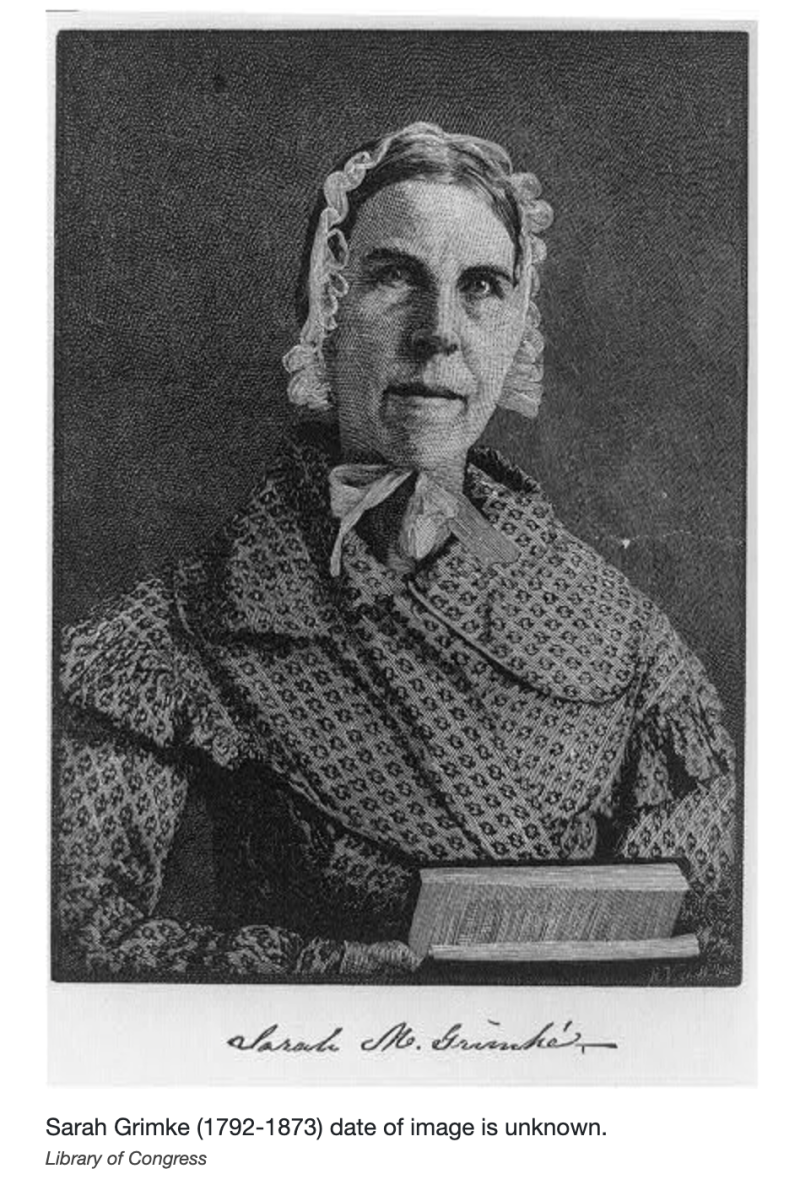
“I ask no favor for my sex. All I ask of our brethren is that they take their feet off our necks.”
Sarah Grimké
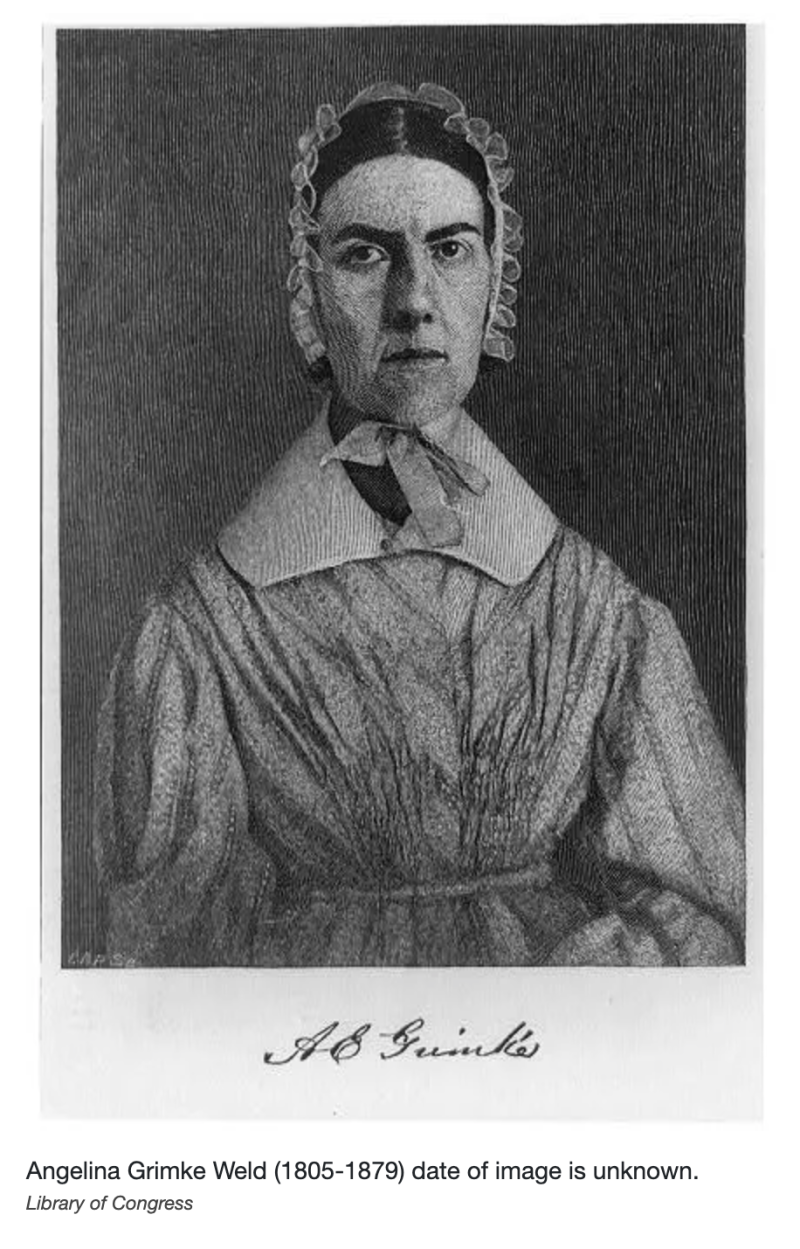
These early and prominent activists for abolition and women’s rights, Sarah Grimke (1792-1873) and Angelina Grimke Weld (1805-1879) were raised in the cradle of slavery on a plantation in South Carolina and a town house in Charleston.
The Grimke sisters, grew to despise slavery after witnessing its cruel effects as children. According to the National Parks Service Women's Rights Section, Sarah later recalled that her father, the wealthy Judge John Fauchereaud Grimke, held his 14 children to the highest standards of discipline and sometimes required them to work in the field shelling corn or picking cotton. She observed, “Perhaps I am indebted partially to this for my life-long detestation of slavery, as it brought me in close contact with these unpaid toilers.”
Sarah became godmother to her baby sister Angelina when she was just 12 years old. Sarah accompanied her father to Philadelphia in 1819 so that he could receive medical treatment. It was there that she encountered members of the Society of Friends, Quakers, who helped her care for her dying father.
She returned to Charleston after he father passed and her feelings of fierce opposition to slavery were quickly renewed: “…after being for many months in Pennsylvania when I went back it seemed as if the sight of [the slaves’] condition was insupportable…can compare my feeling only with a canker incessantly gnawing…. I was as one in bonds looking on their sufferings I could not soothe or lessen….”
Sarah gave up the finery of her upbringing when she converted to Quakerism against her families wishes and moved to Philadelphia in 1821. Following closely in her sister's footsteps in 1829, Angelina had also followed a calling to become a Quaker and moved north to be with her sister.
This made the sisters virtual outcasts in the South, but they were also at odds with many northerners after William Lloyd Garrison published a personal letter Angelina wrote to him in The Liberator.
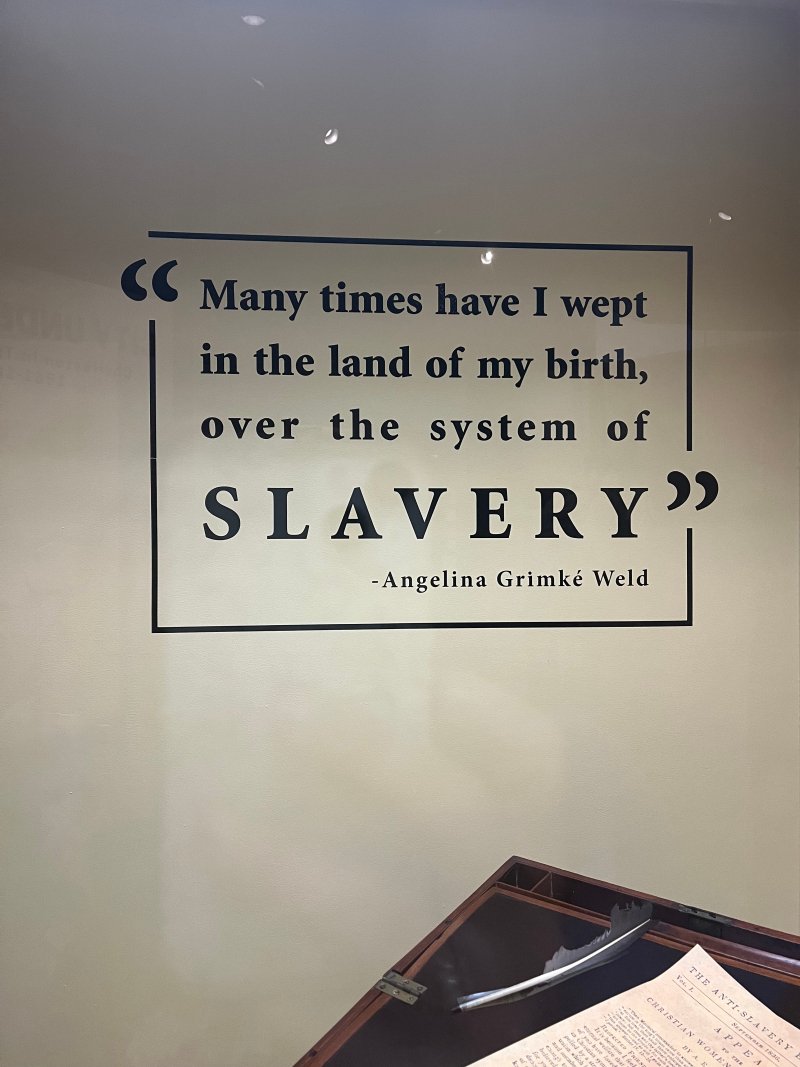
Angelina encouraged Garrison to stand his ground even in the face of mob violence: “If persecution is the means which God has ordained for the accomplishment of this great end, emancipation, then…I feel as if I could say, let it come; for it is my deep, solemn deliberate conviction, that this is a cause worth dying for….”
She bravely opted not to recall the letter despite the outrage it caused among fellow Quakers who believed she was a radical abolitionist. Despite the disapproval they faced from fellow Quakers and from a society that did not accept women as public speakers on controversial topics such as slavery, the Grimke sisters found themselves caught up in the forefront of the antislavery movement.
Angelina wrote her Appeal to the Christian Women of the South in 1836, imploring white southern women to embrace the antislavery cause. She wrote, “I know you do not make the laws, but I also know that you are the wives and mothers, the sisters and daughters of those who do; and if you really suppose you can do nothing to overthrow slavery, you are greatly mistaken.”
According to history, her message drew the ire of southerners who opposed its abolitionist message and northerners who felt that women had no business writing or speaking about something as controversial as slavery. The outcry over women abolitionists prompted Sarah then to write Letters on the Equality of the Sexes.
By the late 1830s the Grimke sisters had firmly established themselves not only as abolitionists but also as proponents of women’s rights.





Comments