‘I know a bank whereon the wild thyme blows,
Where oxlips and the nodding violet grows.’
Front and back yards are blooming with roses and wisteria as May approaches in Sonoma County and with time on our hands at home, what better way to boost spirits than tending to a garden?
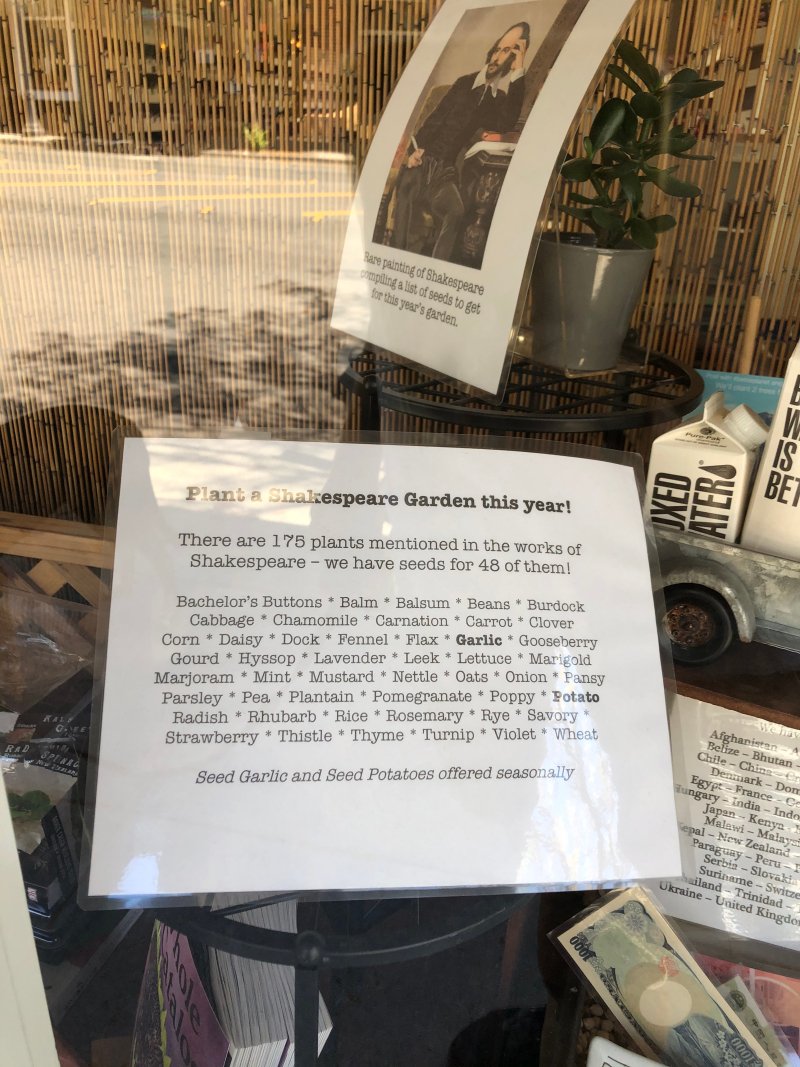
A notice in the window of Baker Creek Heirloom Seed Bank caught my eye on my morning walk this week. "Plant a Shakespeare Garden," it called out! And there's no finer example of this than the grounds the Bard tended to himself over 400 years ago. From Avon to Stratford, the English country gardens he grew up in and explored continue to inspire to this day.
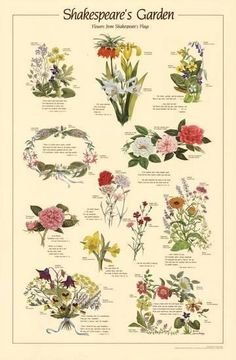
The book Shakespeare's Gardens explores these gorgeous grounds — including Shakespeare's birthplace in Henley Street, his childhood playground at Mary Arden's Farm and his courting days at Anne Hathaway's cottage.
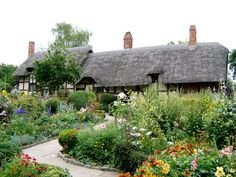
It would be hard to replicate Shakespeare's plant list in its entirety, given the different growing conditions, though Baker Creek does stock some 48 of them!
Baker Creek Seed Bank in downtown Petaluma is closed during shelter in place, though staff are taking weekly, prepaid, no-contact pickup orders on Fridays, between 11 am and 3 pm. Email your order/questions to petalumaseedbank@gmail.com by 5 pm on Thursday evenings for Friday collection.
San Francisco's Golden Gate Park website reports of many residents of the Bay Area and beyond who have focused their own gardens on the blooms and plants mentioned in their favorite Shakespeare play.
As is evident from this complete list, Shakespeare was enthusiastic in populating his works with flowers, plants, and trees.
aconitum (monkshood)
almond
aloe
apple, (also crab, pippin)
apricot
ash
aspen
bachelor’s button
balm
balsam and balsamum
barley
bay
bean
bilberry
birch
blackberries and brambles
box
brier
broom
bulrush
burdock
burnet
cabbage
camomile
carnation
carraway
carrot
cedar
cherry
chestnut
clove
clover (or honey-stalks)
cockle
coloquintida
columbine
cork
corn
cowslip
crow-flower
crown imperial
cuckoo-flower (buttercup)
currant
cypress
daffodil
daisy
darnel
date
dewberry
dock
dogberry
ebony
eglantine
elder
elm
fennel
fern
fig
filbert
flag
flax
flower-de-luce (iris)
fumitor
furze
garlic
gillyvor (carnation)
ginger
gooseberry
goss or gorse
gourd
grace (rue)
grape
grass
harebell
harlock (burdock)
hawthorn
hazel
heath (ling)
hebanon (possibly yew)
hemlock
hemp
herb of grace (rue)
holly
holy thistle
honeysuckle
hyssop
insane root (mythological)
ivy
kecksies (hemlock)
knot-grass
lady-smock
lark’s heels (larkspurs)
laurel
lavender
leek
lemon
lettuce
lily
lime
ling
locust
long purple (probably orchis morio, o. mascula)
love-in-idleness (pansy)
mace
mallows
mandragora, mandrake (mythological)
marigold (calendula or pot marigold)
marjoram
marybud (marigold)
mast
medlar
mint
mistletoe
moss
mulberry
mushroom
musk rose
mustard
myrtle
narcissus
nettle
nutmeg
oak
oats
olive
onion
orange
osier (willow)
oxlip
palm tree
pansy
parsley
pea
peach
pear
peony
pepper
pig-nuts
pine
pink
plane tree
plantain
plum
pomegranate
poppy
potato
primrose
pumpion (probably gourd)
quince
radish
reed
rhubarb
rice
rose
rosemary
rue
rush
rye
saffron (C. sativus)
samphire
savory
sedge
senna
speargrass
stover (grass)
strawberry
sugar
sycamore
thistle
thorn
thyme
toadstool
turnip
vetch
vine
violet
walnut
wheat
willow
woodbine (honeysuckle)
wormwood
yew
Source: The Plant-Lore and Garden-Craft of Shakespeare, by Henry N. Ellacombe. W. Satchell and Company, London, 1884.
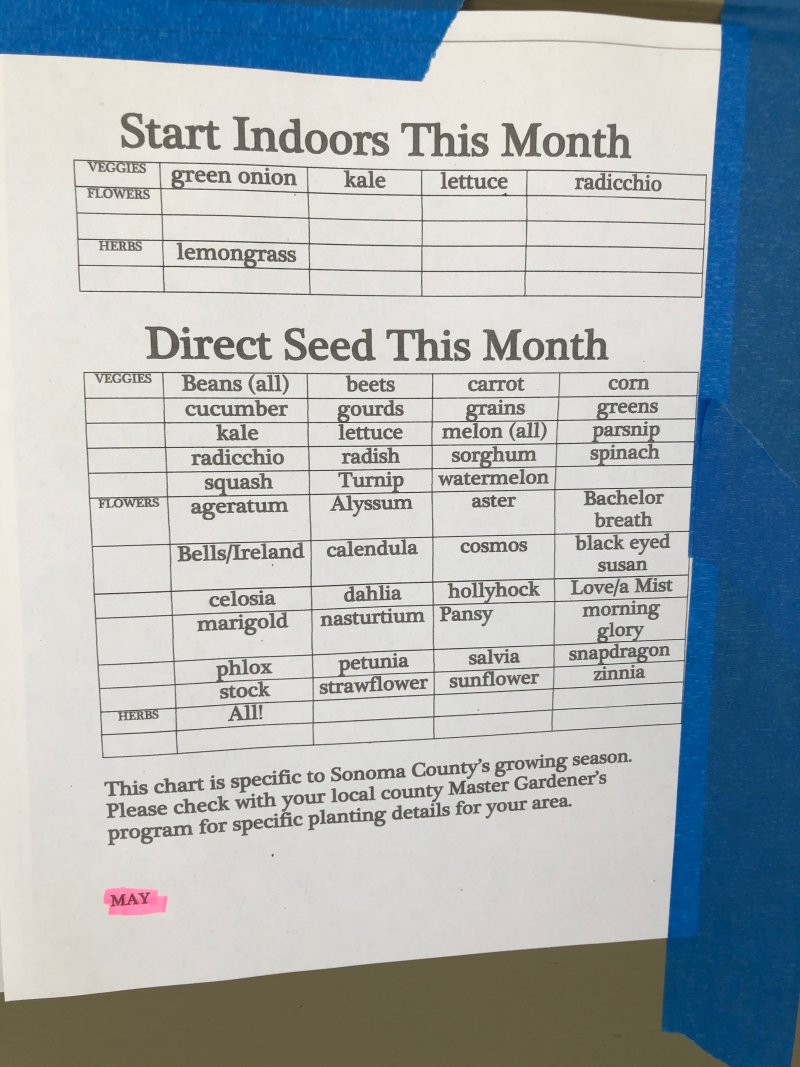
And if you don't fancy the Shakespeare planting idea here's a handy list posted outside the seed store to let us know what to plant in Sonoma County in the month of May:


Comments