“Study the past if you would define the future.”
Confucius
More frequently I find myself crossing paths with the same crowd. Not surprisingly, they're the movers and shakers of our community. The same few names and faces that pop up in all the significant goings-on around town.
What is surprising, though, is the fact that these familiar folk have been physically gone from the (first built) sidewalks and prominent meetings places of Petaluma for over a century.
In my work as an independent journalist, I'm able to follow the stories that have, for me, the most appeal. Lots of these avenues intersect in the most fascinating ways. And now that we're at a time where we're taking a long, hard, post-recent-recession look at the state of affairs with our streets and parks, our landmarks and public spaces, our city's pioneering founding mothers (particularly) and fathers tend to reappear at every corner.
Most visible at the forefront of the current Walnut Park Legacy Project, a collaborative campaign by Petaluma Service Alliance (which consists of seven high profile community groups) is the formiddable Addie Atwater.
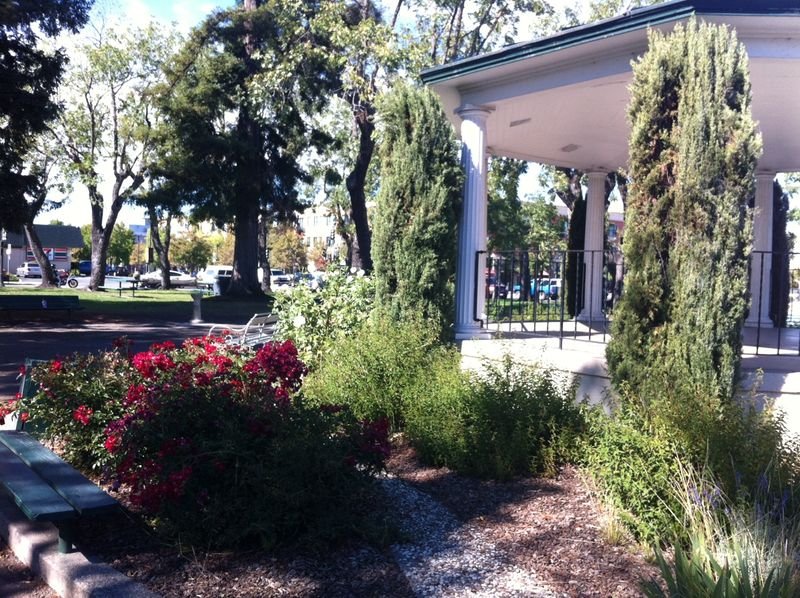
Addie, whose home (long since an apartment house) situated opposite open space that would become the park pictured above and below, was President and founder of the Petaluma Ladies' Improvement Club, formed initially to force the city's hand in dedicating the one block square piece of land into the city's first dedicated play area for children.
"Addie hit the ground running," said Maureen Frances, keen historian and chair of the Walnut Park Legacy Project. "She and a couple of friends (Mrs Daisy Reed and Miss Emma Palmer) fought for a safe place for kids to play."
Maureen described historic accounts of the unstoppable Addie taking her apron off and, fearing child safety from runaways from cattle stock frequently delivered into town, marching to city hall to take on the powers that be (at the time!).
"City fathers wrote a check for $1,250 and John McNear wrote one from his own acount in a matching amount. Addie and her friends formed their improvement club to fundraise for remaining monies though bake sales and luncheons, teas and cutting clover from the land to sell to the livestock industry".
By 1870 the ladies had the means to plant 100 black walnut trees around the park, which was originally picket fenced and named Hill Plaza Park, then D Street Park, later Walnut Park.
According to reporter Miss Rena Shattuck (aka Polly Larkin) in her February 1903 account in The California Ladies' Magazine: "The improvement Club employed men to carry off the rubbish, which amounted to several cart loads and grub up the stumps of old trees, before the gardeners were ready to go to work".
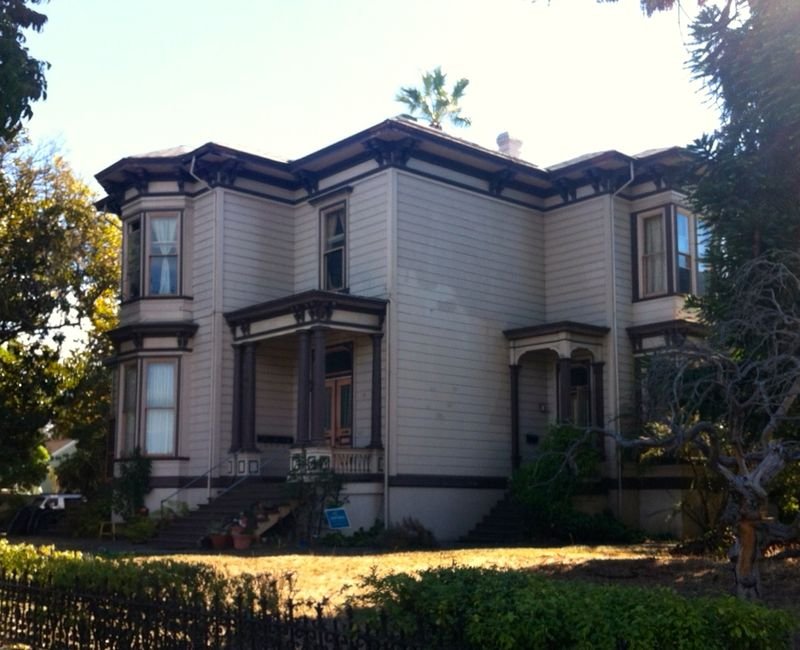
Addie (Daly) Atwater was born in 1836 in Hamilton, Ontario to a well-t0-do family. Her parents moved the family from Canada to New York when she was a child. After marrying accountant Henry Atwater, when they were both around 20 years old, the Atwaters were called by her step-father from New York to Petaluma.
According to local lore, the young couple's extensive trip west took them through the Panama Canal where they landed on the Barbary Coast of Gold Rush era San Francisco before taking a boat up the Petaluma Creek (now known as the Petaluma River), passing by boatloads of beef, chicken, potatoes and other produce being transported to market in the city.
The Atwaters first set eyes on Sonoma County when they were dropped off at Haystack Landing, about three miles south of Petaluma (population just 1,000 at that point).
Prominent families of the day, the Wickershams, McNears and Hills must have been keen to meet their new neighbors with society in slim pickings in the early days. Henry would become bank manager for Wickersham, in fact.
In its early years, Walnut Park had its own water tower tank house, well and windmill. A statue of Hebe, goddess of eternal life, also graced the grounds, but was likely removed by the Women's Temperance Union, as was a matching half-dressed Hebe statue in downtown Petaluma.
Service Alliance have a long history with Addie's vision of a safe place for kids to play. It was the Host Lions Club who built the landmark gazebo in the center of the park in 1927.
Today, it is once again the people of Petaluma, passionate about this park, who have stepped up to restore it to its former beauty. Petaluma Service Alliance including three local Rotary chapters, Rotary, Petaluma Valley Rotary and Petaluma Sunrise Rotary; Petaluma Host Lions and 7-11 Lions; Kiwanis as well as the Elks Lodge have raised much of the estimated $130,000 needed to replace dangerous and crumbling concrete, landscaping, new benches and repainting of picnic tables.
I think Addie would have approved of this great idea to preserve Petaluma family (and philanthropic business) names in such an iconic piece of the city's history. My three sons were raised with frequent visits to Walnut Park and I for one, look forward to leaving a permanent legacy marker of my family's affection for this place.
Commemorative bricks are being sold through the end of October. What a wonderful holiday gift for parents and grandparents or in remembrance of loved ones who have passed. Download order forms at Petalumavalleyrotary.org. Or, call 707 695 4694.
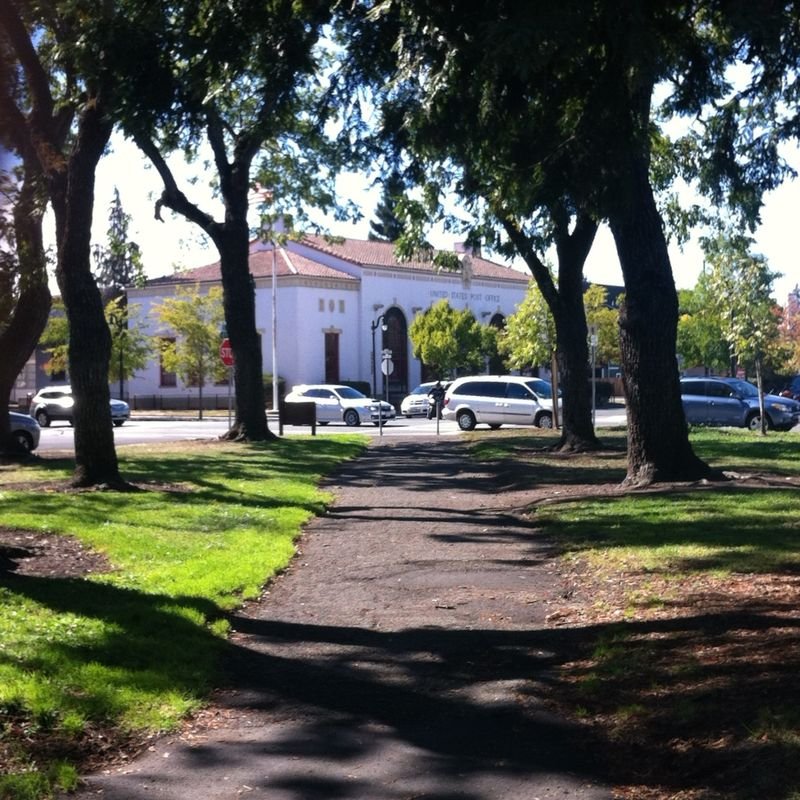
Completed in 1933, the Petaluma Postal Office seen through an avenue of Addie's Black Walnut Trees, sits on land that housed the former home of the city's most well known businessman, John A. McNear. I suppose he must have taken some brief moments away from enterprise to stroll the tree-lined avenue above.
According to the Old Farmers' Almanac: "Early settlers discovered black walnuts growing in mixed forests from Canada to northern Florida and west to the Great Plains. They found that its rich-brown heartwood was exceptionally resistant to decay and put it to use as fence posts, poles, shingles, and sills. When surrounded by other trees in the forest, black walnut grows straight and tall with few, if any, lower branches. When planted in the open, the tree will branch out closer to the ground, developing a spreading shape that makes it easier to harvest its sweet, round, two- to three-inch nuts. The settlers snacked on the nutritious nuts out of hand, added them to soups and stews, and ground them into meal for baking; the hard shells provided a perfect package for storing the nuts over winter."
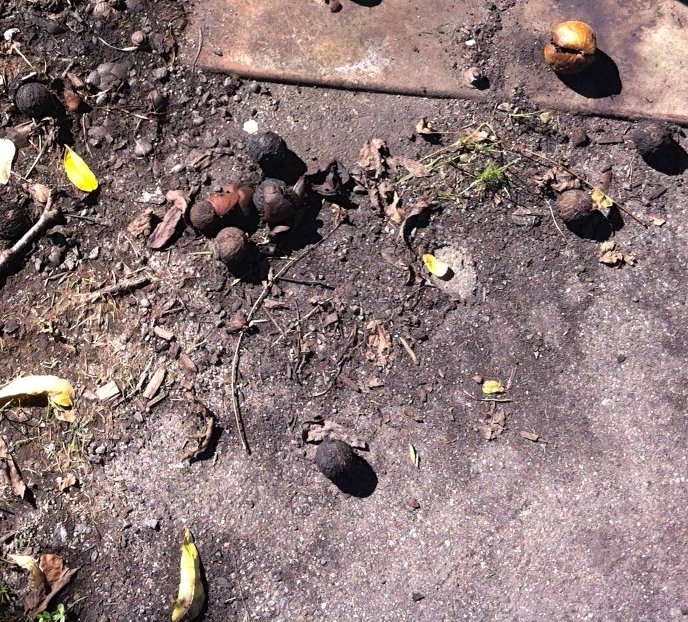
Black walnut has its dark side. According to the Almanax, not only are the blackened nuts annoyingly abundant underfoot, roots, which may extend 50 feet or more from the trunk, exude a natural herbicide known as juglone that prevents many plants from growing within reach.
Addie and her friends must have been attracted to the considerable shade provided by the Black Walnut when planted in open space.
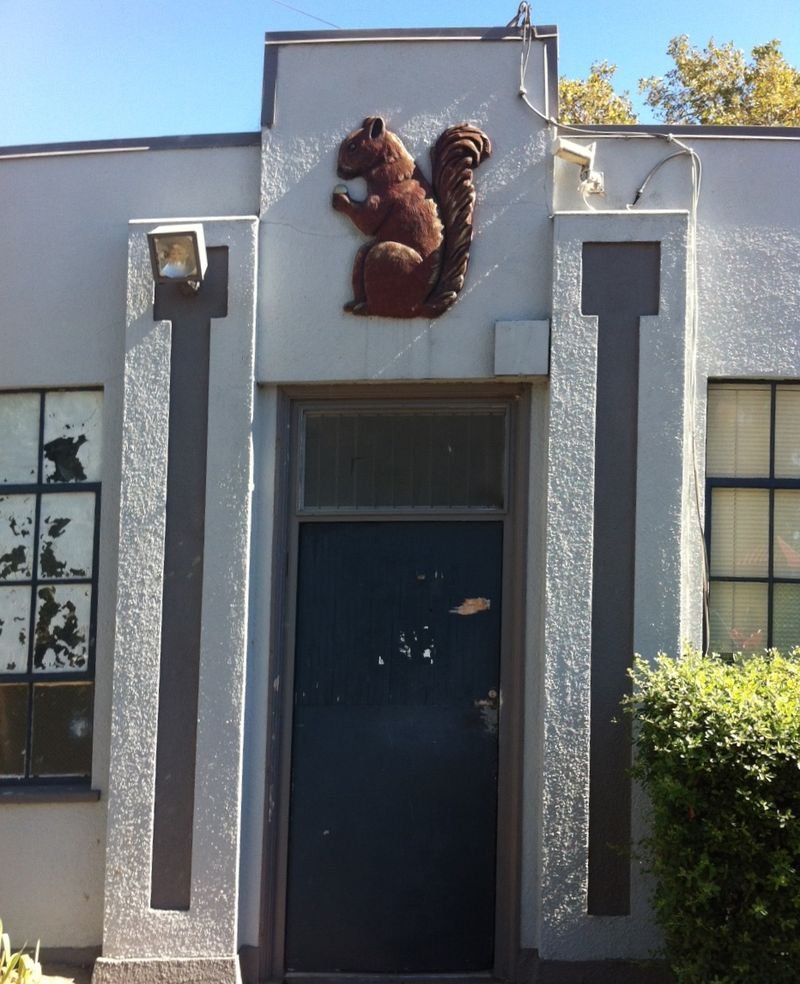 Architect Brainerd Jones designed this building on the south side of the park. It was originally used as a sort of early childcare center/pre-school. "It was a playroom for the children visiting the park," said Maureen. "A second room, inside, was used as a resting place".
I'm not sure when the building was converted to a rest room. Public conveniences are few and far between these days and though we appreciate the care that Parks & Rec take in keeping them ship shape, it's nice to think of the Ladies of the Improvement Club taking turns, along with a City Parks person, in staffing the original playroom. Hopefully sufficient funds will be raised to spruce up this historic building.
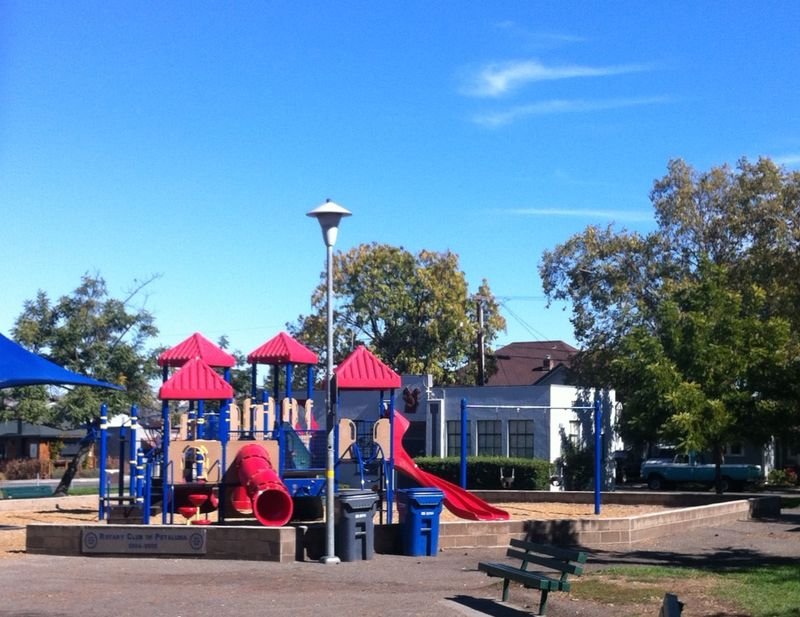
The Ladies Improvement Club made provisions to leave the park in trust to insure that it remains preserved as a safe place for children. The park, given its central location, has had its ups and downs over the past couple of decades, particularly during recession years. Yet service groups continue to step up to remind the City and us, of its important role in the community.
Addie was a busy and compassionate and learned woman. In addition to her role in the Petaluma Ladies' Improvement Club, she was also president of the Humane Society, the Garden Club and helped create a grant that led to the funding of Petaluma's Carnegie Library in 1900.
If you would like to be involved in commemorating Addie's legacy by volunteering services, making a donation or purchasing a commemorative brick, the Walnut Park Legacy Project leaders would love to hear from you. Together, we have the opportunity to make sure Walnut Park is a thriving, attractive and safe place for Petaluma children and their families for the next 140 years.
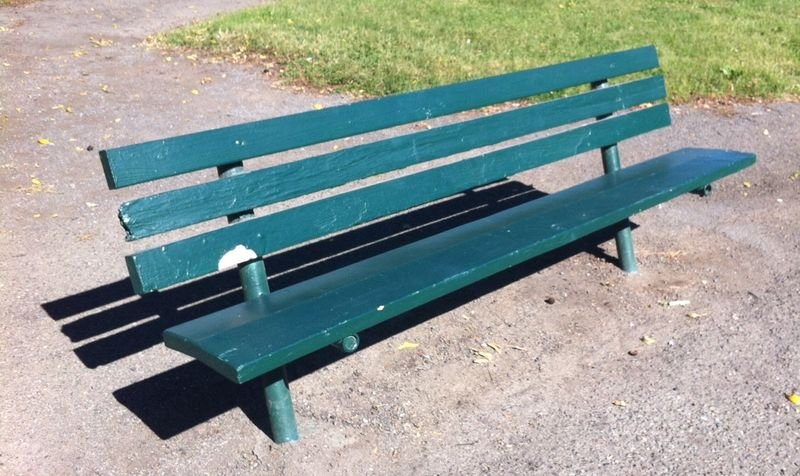
“History isn't about dates and places and wars. It's about the people who fill the spaces between them.”
Jodi Picault


Comments