Cowgirl Creamery's Sue Conley is reminded today of the American 'Food Revolution' of the 1980s when U.S. culinary enlightenment made a massive impact on middle class food culture, with restaurants and home cooks focused on the bounty and benefits of unprocessed whole foods, fresh and hearty flavors.
As partners in the first organic dairy to have been established West of the Mississippi, Cowgirl Creamery now represents 60 of America and Europe's prized artisan cheese makers as the country's most respected distributor for small-scale, premium quality produce.
California Artisan Cheese visionaries and pioneers, Conley and business partner Peggy Smith were on site to welcome farm tour participants from the 6th Annual California Artisan Cheese Festival on a visit to their Petaluma warehouse district production facility this March, 2012. Much to the delight of cheese aficionados, industry insiders, foodies and hobby cheese makers, the California Artisan Cheese world's most unassuming celebrity duo spoke about the current renaissance in the state's rapidly expanding farmstead cheese industry.
So rapid is the growth of artisan and farmstead cheese making (the difference being whether or not the cheese maker actually has his or her own dairy herd), experts such as tour leader Ellie Rilla (Community Development Adviser for University of California Agriculture and Natural Resources) predict that over the next decade, 90 to 100% of regional dairies will have converted to organic methods.
"The movement is spreading like wildfire," said Rilla, co-author of Farmstead and Artisan Cheeses, A Guide to Building a Business . "Animals are more healthy than they have ever been."
Happy, healthy herds make for extraordinary artisan cheeses, as we discovered during farm tour C, just one of four options of Pure Luxury mini-buses stopping in for a closer look at a compelling variety of cheese making operations from start-ups to established giants in this new American Artisan Cheese Revolution.
"We've been so happy with what's been happening in this region," said Conley, delighted by the successful development of the Petaluma-located Artisan Cheese Festival and its showcasing of what Rilla called the 'Normandy of the North'.
Whilst launching their own uniquely branded creamery in a converted barn in Point Reyes, back in 1997, the Cowgirls, Conley and Smith (college friends from the East) considered this prime, pristine coastal area with its rich, dairy farming heritage, ideal for the development of a renegade allegiance.
"Families throughout the area were thinking they might have to give up their dairies after generations of ranching in the region," said Conley. Family-owned dairy operations were closing at an alarming rate at the time that Rilla put on a 1998 Artisan Cheese making & organic farming seminar at the Creamery in Point Reyes.
"When we saw them - the dairy farming mainstays in the community, leaders in the agricultural industry such as Straus and the Giacomini's, thinking about doing something as renegade as transitioning to organic practices and cheese making, we knew we were doing something really significant," said Conley. With now 28 producers in rural West Marin and Southern Sonoma County, up from an original four artisan cheese making operations in the region around the turn of the millennium: "People are being brought back to the farms with enthusiasm," said Conley.
Smith said that the early adaptors, Straus and the Giacomini's, were: "Very bold and innovative, everyone was watching them to see what they did."
Rilla added that "the old dairies are being fixed up again as the next generation of farmers are looking at sheep and goats in place of cows. The sky's the limit for sheep and goat milk at this time," she said.
Marketing Director at Cowgirl Creamery, actor, writer and 'Dairy Heiress' Vivien Straus led the tour at the Creamery's Petaluma facility, bringing cheese loving guests full circle with her recounts of her family's West Marin dairy heritage, interspersed with the techniques of the Cowgirl's distinctive cheesemaking. It was Straus milk that made the mold for the Creamery's trademark offerings in the early days out at Point Reyes.
Straus spoke of the history of dairies in and around the West Marin peninsula since the 1850s, of the steep price of quality butter made in the area during the Gold Rush, a valuable commodity considering its outstanding taste, boosted by a long growing season of damp sea air and salty grass. It's remote location, poor book keeping and complex land right issues led to creditors soon taking control of a vast track of land on the peninsula, lettering and leasing existing ranches from A to Z.
More recent history with milk prices set in Chicago continues to threaten surviving dairy ranches with more and more disappearing each year. The development of the Marin Agricultural Land Trust enabled transitioning to organic farming methods, allowing for participation in Organic Milk price setting, which, according to Straus, is a more realistic scenario in which dairies are able to thrive.
First cheese to have been made out at the Cowgirl Creamery in Point Reyes was the company's old fashioned clabbored cottage cheese. More popular today than ever, its freshness makes for an exclusivity that is reserved for the lucky, immediate Bay Area market. This, as well as Cowgirl's 'everyday' cheese, Waggon Wheel, as well as several other of the Creamery's cult cheeses are still made with Straus milks and creams. Though decadent in the extreme, I did succumb to temptation and grated a portion of Waggon Wheel after my visit for a homemade mac and cheese that vanished from the baking dish at astonishing speed (even with my regular crew in the kitchen).
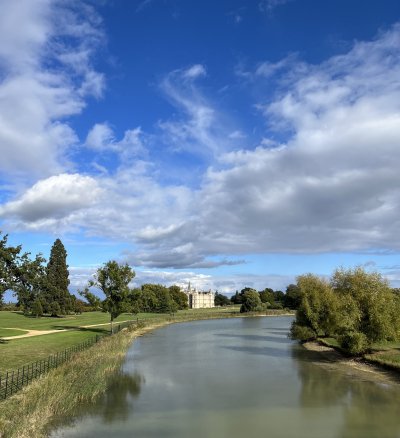
Our pit-stop to visit the Cowgirl's certainly set the scene, though this was our second port-of-call on tour, first being the picturesque Weirauch Farm & Creamery, (featured in photos at top and below)in the foothills of Sonoma Mountain in rural East Petaluma.

Go ahead and pronounce it "Why-Rock" and hopefully you'll remember to be inclined to give this great husband and wife farmsteading cheese maker team with its unusual name your support next time you're shopping a farmer's market, online with their members' cheese club, Olivers Market in Cotati, Mission Cheese in San Francisco and hopefully soon, here at the Petaluma Market.
Right now, the farm is about a year-and-a-half-old, with several lively, ambrosial organic cows milk cheeses in production and for sale. Carleen and Joel Weirauch have certainly cut their teeth year-round with their cows milk cheeses, justifying the exclusivity of the sheep product and made in a portable, state-of-the-art cheese making facility converted from a mobile classroom unit. The Weirauch's don't own their own land, so building a permanent structure didn't make sense financially. "We can be gypsy's, moving around if we want to," said Joel Weirauch. According to Rilla, such a sound and strong business plan is every bit as critical for newbie cheese makers as a steady and secure milk supply source.
Still, the Weirauch's are not beginners in this business of farmstead, artisan cheese making. Carleen grew up in the area, raising backyard animals and Joel made cheese in France. Their sustainable farming practice has garnered them considerable praise from fellow herders who describe the couple as being exceptionally good stewards of the land and a highly conscientious, caring shepherd and shepherdess with 99 newborn lambs joining the flock this Spring.
Sheep have a five month gestation period, so, after a two month birthing season, that means just five months of milk a year for the farm's sheep cheese making production. twelve at a time are milked in the farm's portable milking shed (with cooling room). Though the couple used to milk by hand, a small-scale commercial, stainless steel, vacuum pump milking system represents the latest business investment. Since Carleen Weirauch hand carries milk cans back to the cheese making room, smaller, five gallon cans are optimal.
The couple raises mid breed sheep, high milkers mixed with a hardy local breed, primarily East Friesian and Lacaune. Milking will start this season in April and the farm's cheese club membership is building to such an extent that it may be feasible to expect that, not unlike boutique winery production, small scale new releases might very well be snapped up by an eager, online niche-market following.
A flurry of dollar bills emerged from pockets and backpacks of tour participants during our sampling of the couple's initial cow milk cheese line in a sense that having wandered the green pastures of this impassioned enterprise and touched the woolly heads of the herd, the Artisan cheese world is comfortably at home on the kitchen table. Oohs and Aahs were attributed freely to the farm's soft, spreadable Doubloon, an aged, raw Carabiner, aged Tomme and a raw, washed Peau de Peche.
Our last farm visit of this particular tour took us across town in the early afternoon and out West to Two Rock to the working Organic ranch and Victorian farmhouse home of dairy farmers and goat cheese makers, Don and Bonnie DeBernardi.
Bonnie DeBernardi is a perfect example of an immaculately groomed, unflustered, fingernail-polished, traditional farming matriarch of the region who micro-manages day-to-day homesteading, a large extended family and a herd of over 50 goats in the midst of a 700 cow dairy farm.
The goats, some two dozen of whom were born in the two weeks prior to our visit (four that very morning), are clearly her pride and joy, second only to the couple's own grown kids and grandkids. In fact, it was as a surprise for her two now 16-year-old grandsons that Bonnie DeBernardi had first introduced a couple of newbian goats into the fold.
With 37 gallons of fresh, organic goat milk currently on hand every other day, her first generation Swiss-Italian husband employs the same style of traditional Alpine cheese making skills as relatives still making cheese in the mountains of the steep Swiss/Italian borderlands.
Thirty seven milking goats, one well-contained billy goat, plus all the newborns tottering around the barn stalls were as big a hit with the visitors as you might imagine, the babies being rather like a few litters of puppies and just as amenable to being scooped up for a passing cuddle.
Bonnie DeBernardi's clearly in charge of the herd and twice daily milking routine (she stopped milking by hand when the brood of does reached into the 30s). Four goats are milked at a time, with regular shifts undertaken by the couple's grandsons. "I do it my way," said DeBernardi, staunchly waiting six months longer than typical to breed her goats - after they're 18-months-old.
Likely the 'littlest cheese factory in Calfornia' - Don DeBernardi's utilitarian cheese making facility consists of several carefully converted shipping containers, positioned between the house and the milking shed.
After successfully converting his dairy to organic and expanding his dairy cow herd several years ago, the call of cheese making came at a time in his career when DeBernardi found he quite enjoyed the gentle, calming routine of shutting himself away in his self-designed, small-scale cheese making unit, radio on, the process taking over other day-to-day concerns for several hours at a time.
And after a couple years of experimenting with different styles, DeBernardi's organic goat cheese is about as good as it gets.
Tour participants were charmed with the couple's warm and friendly hospitality, enjoying a delicious sampling of raw, young and aged goat cheeses indoors at the family's extended dining table in the comfort of the DeBernardi's open-plan farm kitchen.
A Two Rock Valley Goat Cheese tasting room is likely to be in the cards for the future, out there on Valley Ford Road between Petaluma and the coast. In the meantime, look for Don DeBernardi (pictured below) at farmers markets throughout the region this summer, his cheeses are stocked in specialty cheese departments in stores around Sonoma County, or buy direct by phoning him at 707 762.6182.

Below: Sue Conley of Cowgirl Creamery (top left photo) and Marketing Director, Vivien Straus (below, right)

Some Fun Facts:
- 90% of cheesemaking is cleaning!
- All curds look the same until the production process removes different amounts of moisture.
- Cheese is a living food. The aging of a cheese depends upon what the cow or goat or sheep are eating.
- Eat cheese within two weeks of purchase, earlier if opened. The longer it sits in your fridge, the more it will start to take on the flavors of other foods.
- The job of a cheese maker is to blend skills of cheese making production with a distinctive expression of the characteristics of its dairy breed, pasture, climate and terroir.
- Thinking of starting your own Artisan cheese production? To succeed commercially, even on a small scale, bank on making a minimum start-up investment of $100,000.
- Over 1,700 cheese lovers attended the 6th Annual California Artisan Cheese Festival over a three day weekend, this March 2012.
- Sonoma and Marin County's are fast becoming one of the world's centers for Artisan Cheese.
- Cheese consumption by the average America in the 1970s was 18 pounds per year. By early 2000 (according to Ellie Rilla's 2011 U.C. Cooperative Extension report: Coming of Age, The Status of North Bay Artisan Cheesemaking) per capita consumption raised to more than 30 pounds per year. Travel, interest from chefs and restaurants, new media coverage, growth of farmers markets and speciality stores, plus an increase in consumer interest in eating a variety of American made cheeses will drive cheese consumption expectations to 40 pounds per capita in the next 4 years.