
Nothing much beats being behind the wheel of a rambling old Chevy, bumping along the narrow, winding Spring Hill Road region of West Petaluma out towards Two Rock, in the direction of the coast. Chileno Valley Road, Marshall Road, Bodega, all equally captivating in their neighboring routes through tranquil beauty, but the craggy twists and turns of peaceful Spring Hill have a charm all of their own.

Late summer is pretty much as deserted as any other time of year out west into what is mostly dairy ranch country. Appealing for this very reason, as much for its scenic miles, cyclists cling to the smoother sections of the ramshackle road, content in its lack of motor traffic. I did pass one lone hiker on my most recent foray along Spring Hill Road -trundling along at a meandering pace, miles from anywhere and seemingly happy as someone surrounded by rolling pastureland and blue skies should be.


The Waltons are former advertising company principals (for two decades in Sonoma County, New York prior to that) who, 12 years back, boldly decamped Santa Rosa to the country for the blank canvas (Tim's an artist, so the name Canvas Ranch became doubly appropriate) of rural enterprise on 28 acres of what was, then, sprawling bare land.
The couple share a talent for savvy business sense: "We started our farming career with the mindset of not planting a seed or raising an animal without it having already been sold," said Deborah, who has taught sustainable farming at the Santa Rosa Junior College.
The luxurious-looking cashmere goats (pictured above) were first on the scene after Deborah discovered their elegant and entertaining merits on a farming fact-finding trip to Chianti Italy, in 2000 and sourced her first kid goats from Montana. It is the fine, soft, downy, winter undercoat of the goat that produces the fiber for cashmere.
Next came the introduction of the Olde English Babydoll Southdown sheep, a rare sighting in this part of the world. An early road trip to Washington State and Oregon for the first breeding pair provided fodder for a story of its own. These are smaller sheep than the norm, almost half the size of the standard American sheep and were endangered at the time. Deborah's eye for almost-forgotten treasure in the agricultural world has proved fortuitous, not just for her own farming endeavors.
Raised on the Sussex hills in Southern England, the Babydoll Southdown's had to deal with a tough topography and had been on their way to becoming extinct due to their lack of saleable meat.
It's interesting to know that the Southdowns were actually the first sheep brought over to the United States, but today's standard breed for the meat market bares no resemblance to the original, due to the many decades of supersizing within the U.S. industry.
They look like little teddy bears and are fairly timid, though happy to eat from my hand!
Over time, the Walton's flock has led to considerable success and renown for Canvas Ranch as a supplier of now hundreds of sheep leasing and sales for high end vineyard weed control in wine country, starting with an initial contact at Cal Poly.
Next up is a lease agreement with the neighbors. Solar fields at the Coast Guard base make the use of pesticides and weed wackers, thankfully, impractical. Low grazing sheep are the ideal solution for keeping the solar fields trimmed.
Sheep School in Fall and Lamb Camp in Spring bring students from around the country to Canvas Ranch, each year.


These particular dogs lounge around amongst their flocks by day, but come night time, they switch to high protection alert. I learned from Deborah, who is as much a North American expert on the Maremma livestock guardian dog as she is the cashmere goat, babydoll sheep and Ameraucana chicken.
A self-confessed research fanatic, the marketing-guru-turned-country-chick set out to create a manageable haven of family-style farming more in the style of what you'd expect to stumble across in the hills of Italy or France than the traditional dairy-lands of Sonoma County and West Marin. Farmer's Market and CSA customers as well as restaurateurs love the Walton's extraordinary produce.
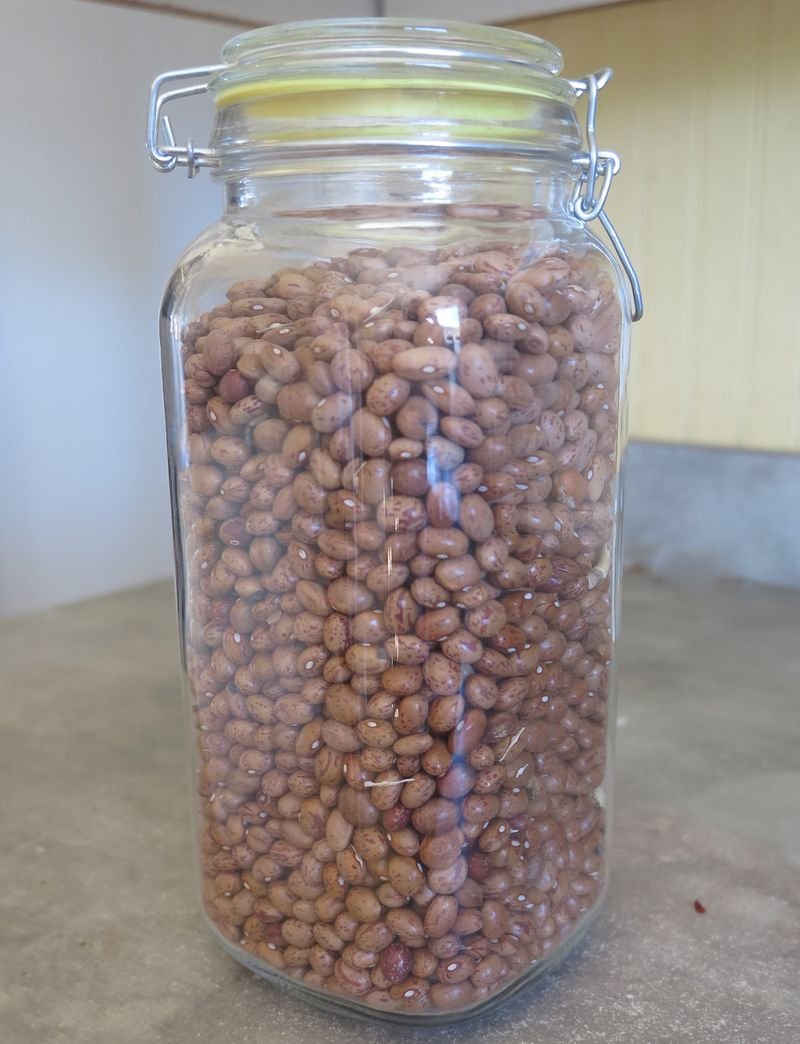
Visits to Italy inspired in the early days of the ranch development from bare land to what is now a haven of dry-farmed beans and heirloom grains (such as rye, golden flax, farro, all now staging a comeback in the gourmet world), organic fruits and veggies and farm fresh eggs.
Of course, a lot of early experimentation was necessary to figure out what grew and what didn't in the soil and microclimate of Canvas Ranch. The Waltons figured out simple, though ingenious ways to nurture several crops that had been previously considered a tough call out in Two Rock.
It amazed me, to hear, as we sat over morning tea at Deborah's old pine kitchen table, that the couple manage the entire operation with the help of one full-time farm hand and one farmer's market assistant.
"We don't milk and we don't raise animals for meat," said Deborah. And though the couple keeps busy seven days a week, they still find time for outside interests, running a sweetly compact, on-site single-guest ranch retreat and prolific, professional artist Tim's ranch studio.







Comments